review: Salvador Dalí House Museum
While in Spain (Sant Feliu de Guíxols, Costa Brava) we embarked on our second Salvador Dali roadtrip. Located in Cap de Creus, in Cadaques, the Salvador Dali House Museum is a popular and unique tourist attraction. When visiting the museum, you get a glimpse into the personal life of the great artist.
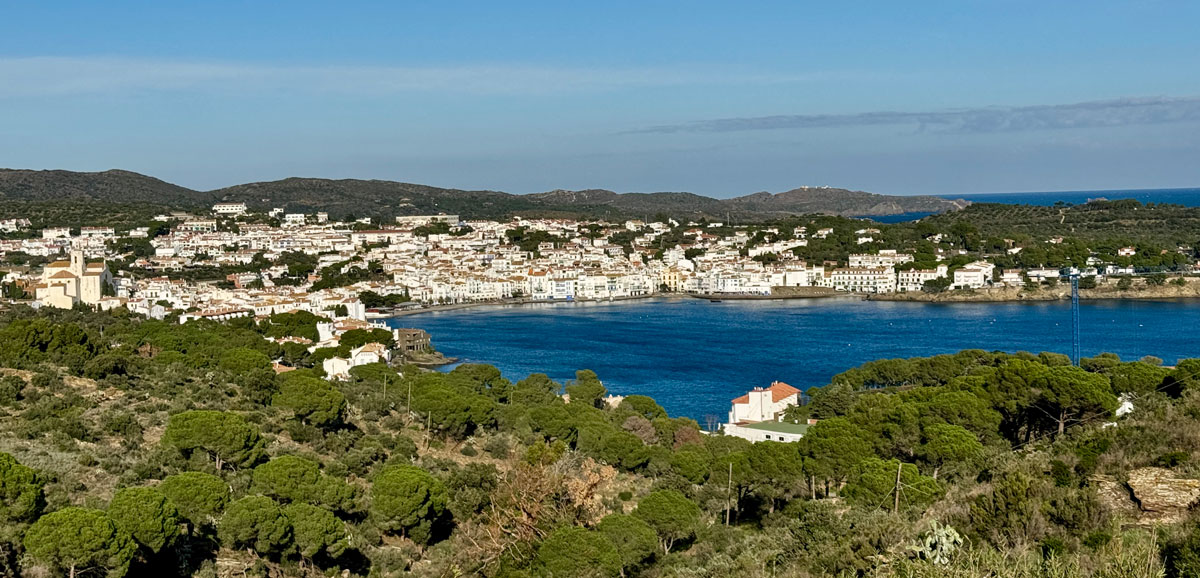
The drive to Cadaques was gorgeous. We kept stopping to take photos of the stunning landscape. The closer we drove to Cap de Creus, the more mesmerizing the views became.
Salvador Dali House Museum
When we arrived at the home, we were informed that no bags were allowed on the tour. Lockers were available for a couple of dollars however, so that was no big deal. *ETG tip, carry coins for exact change to be prepared for unanticipated incidentals like this. We were included in a tour with some French tourists as well as a German couple who spoke excellent English. So, the tour guide led the group in two languages.
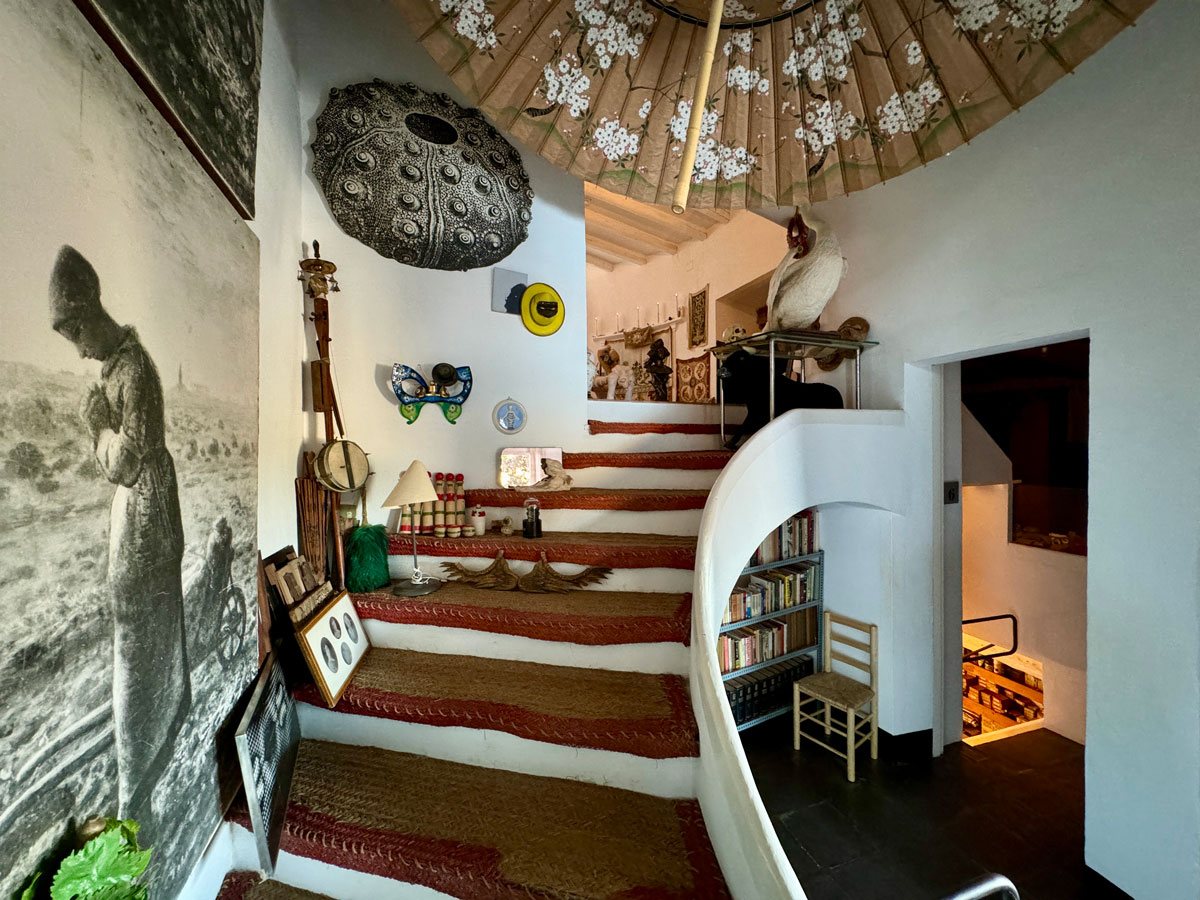
The famed artist Salvador Dali spent over forty years of his life at this residence from 1930 to 1982. This is where he lived with his beloved wife Gala, who he often called his muse. It is no wonder that much of Dali‘s legendary work was created here, overlooking the breathtaking bay of Portlligat. What began with a small fisherman’s hut, grew substantially throughout the decades via numerous small additions. This resulted in the creation of a labyrinthine style home that keeps extending with every turn.
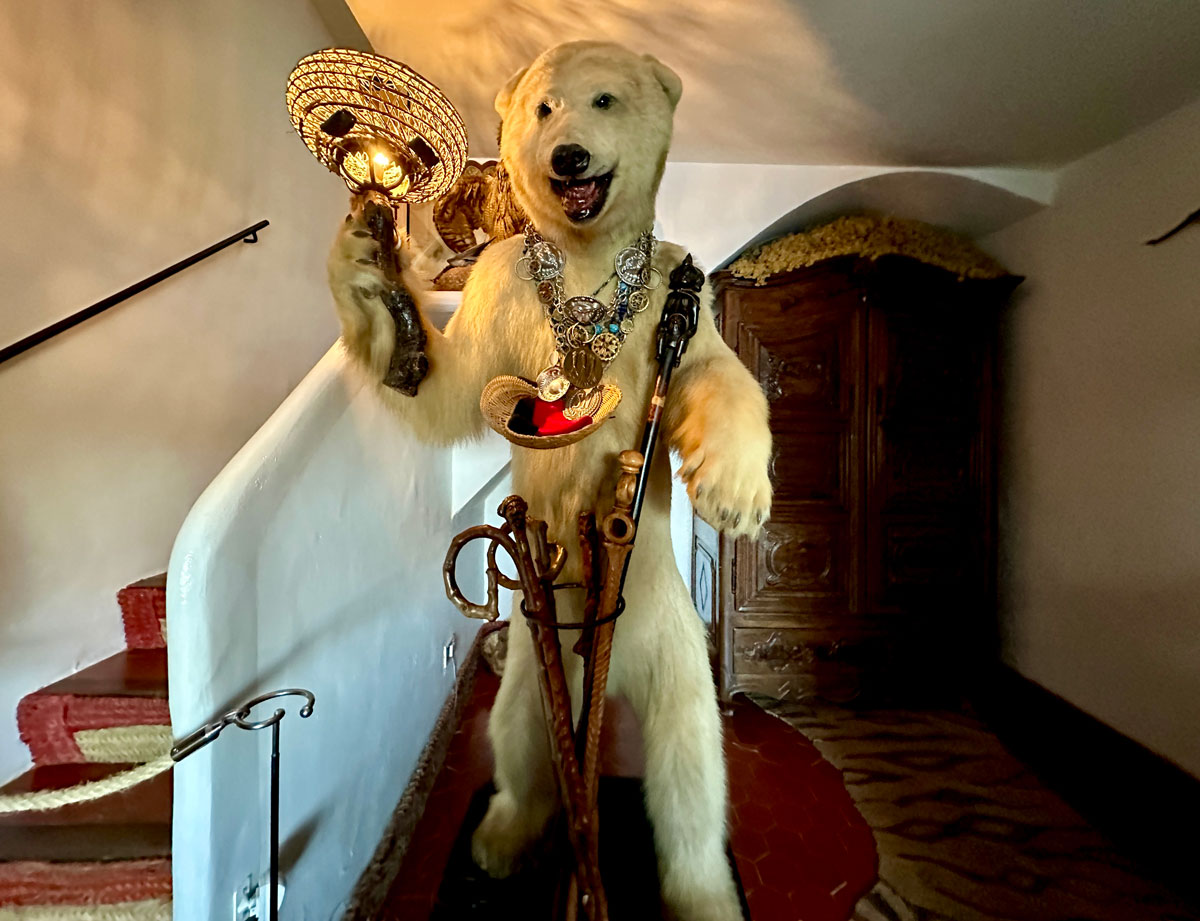
“The Bear Room” at Dali’s House
A life-size taxidermied polar bear greeted us in the “Bear Room.” He wore necklaces around his neck and also held a lamp. In front of the bear stood a rack filled with walking sticks. Additionally multiple taxidermied birds looked down on us, several with wings outstretched. It was a bit eerie as I walked past the looming birds. A sculpture of a fortune teller’s torso sat on a rounded display shelf which jutted out from the wall.
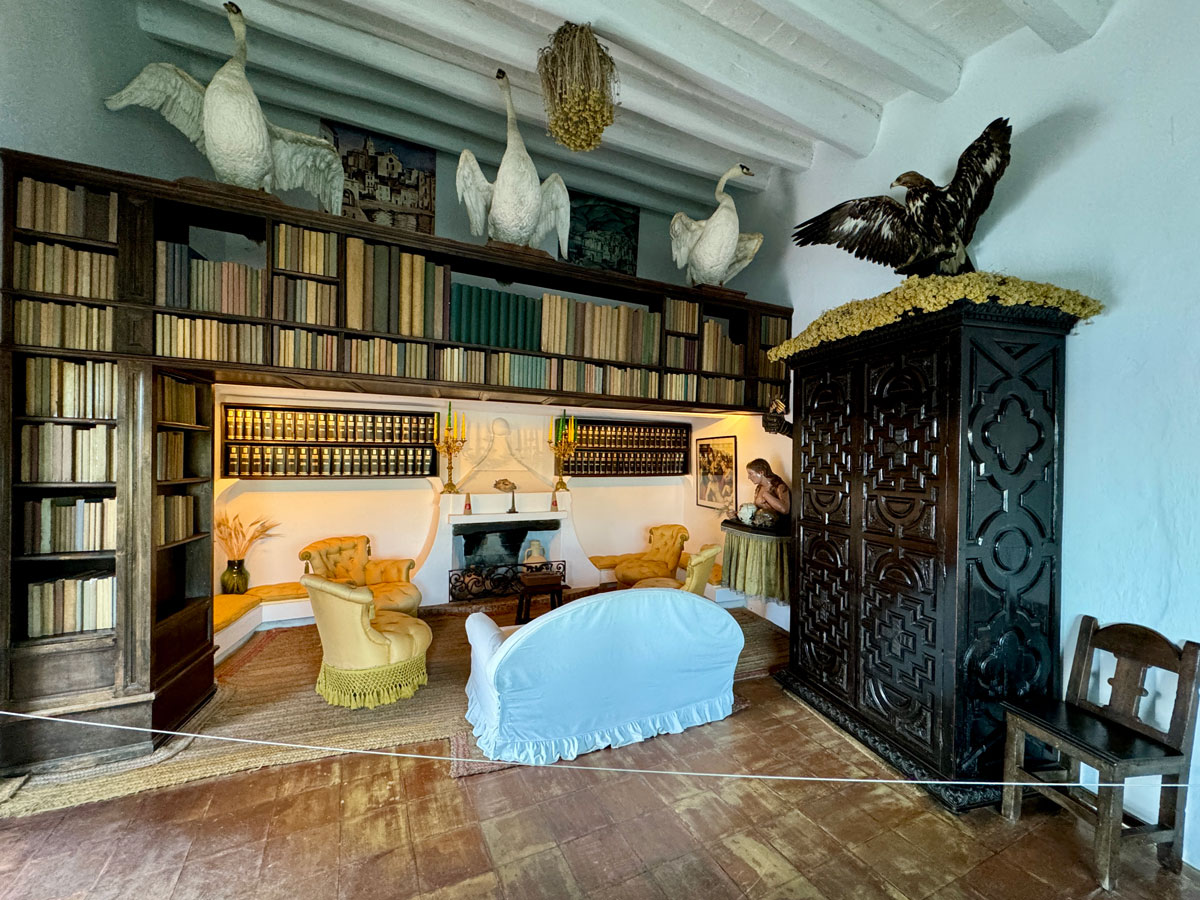
As the tour led us to Dali’s studio, the guide told us how meticulous the artist was. It was obvious he was anal retentive. The artist had precisely organized every art tool just as it needed to be. Moreover, Dali designed the house in a very specific way. His bedroom had a mirror that reflected the sunrise. Live birds in a cage brought Mother Earth’s melody into the iconic artist’s sleeping chamber. The space he created allowed him to wake up every day to the sound of birds with a view of a sunrise. He also kept one cricket in a cage in his bedroom, allowing him to fall asleep with the sound of one cricket chirping.
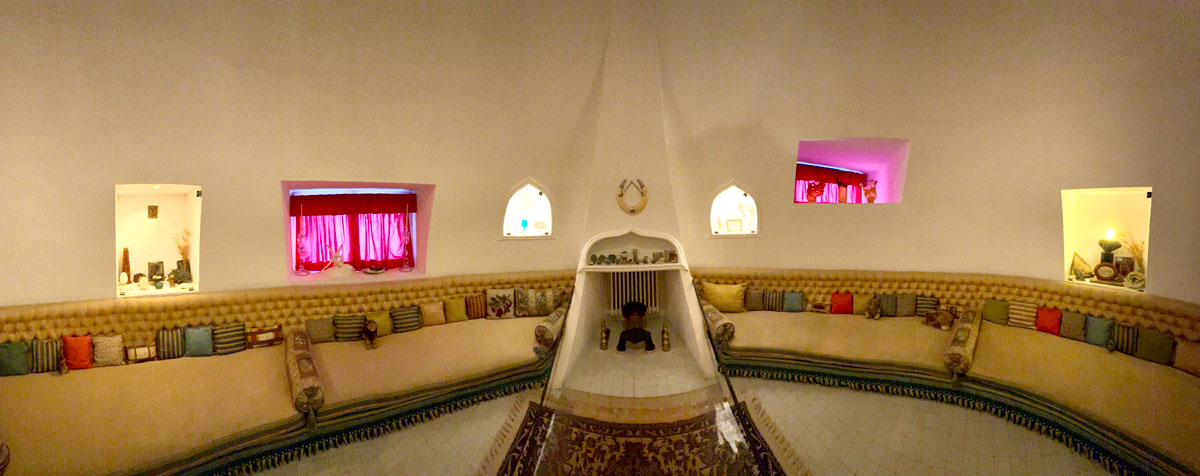
Gala’s Oval Room
His egg motif used at the Theatre-Museum carried through to his house as well. The tour guide explained that Dali loved the symbolism of the egg. He associated it with rebirth as well as all of us needing a hard exterior while keeping a soft center.
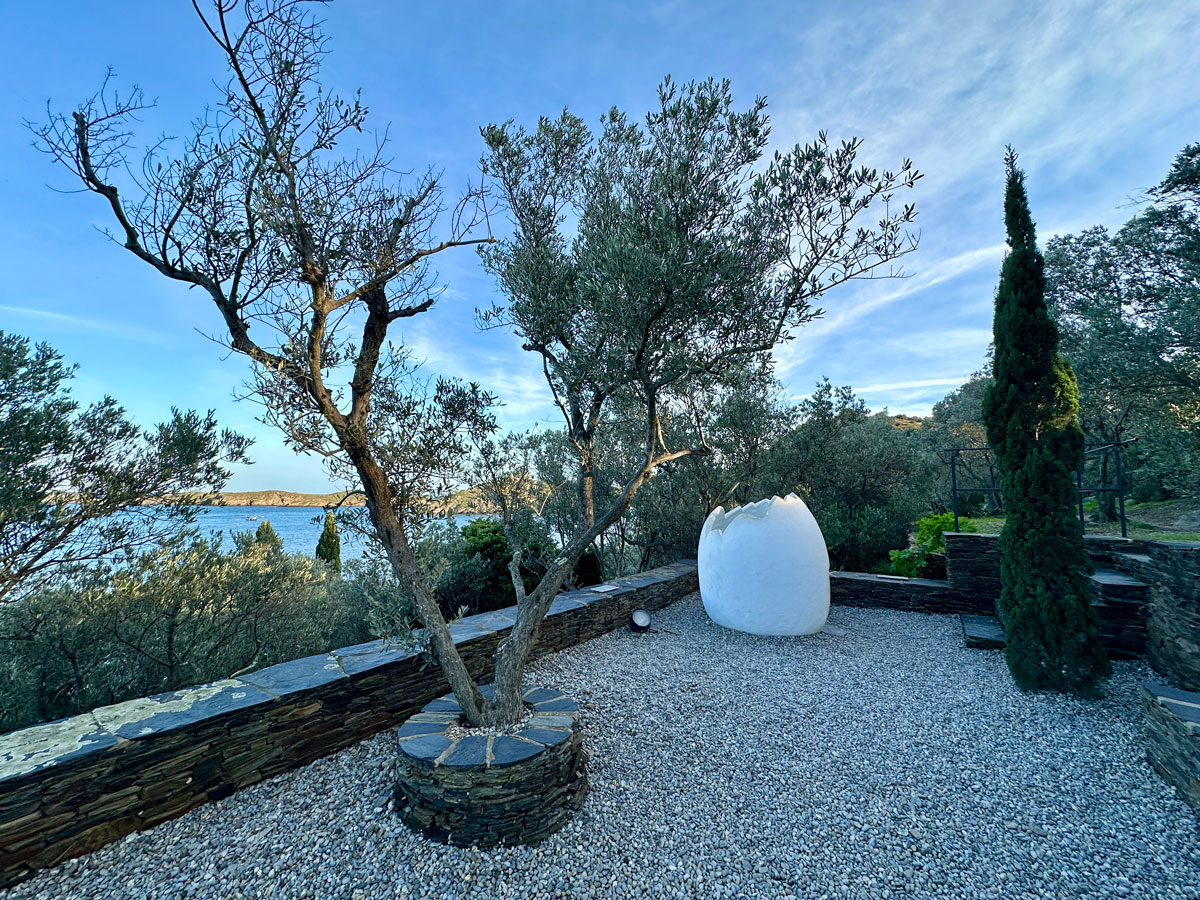
Dali’s Out door Space
As I stood on this beautiful patio overlooking the sea, I thought “Wow Salvador Dali must have stood in this exact spot when he lived here. This gorgeous bay is what he saw that so inspired his artwork and his life. What was it that stirred this creative mind’s genius to keep continuously producing masterpieces throughout his life?”
Every room had its own personality with stringed instruments, art assemblages, and stuffed animals hanging from ceilings and walls.
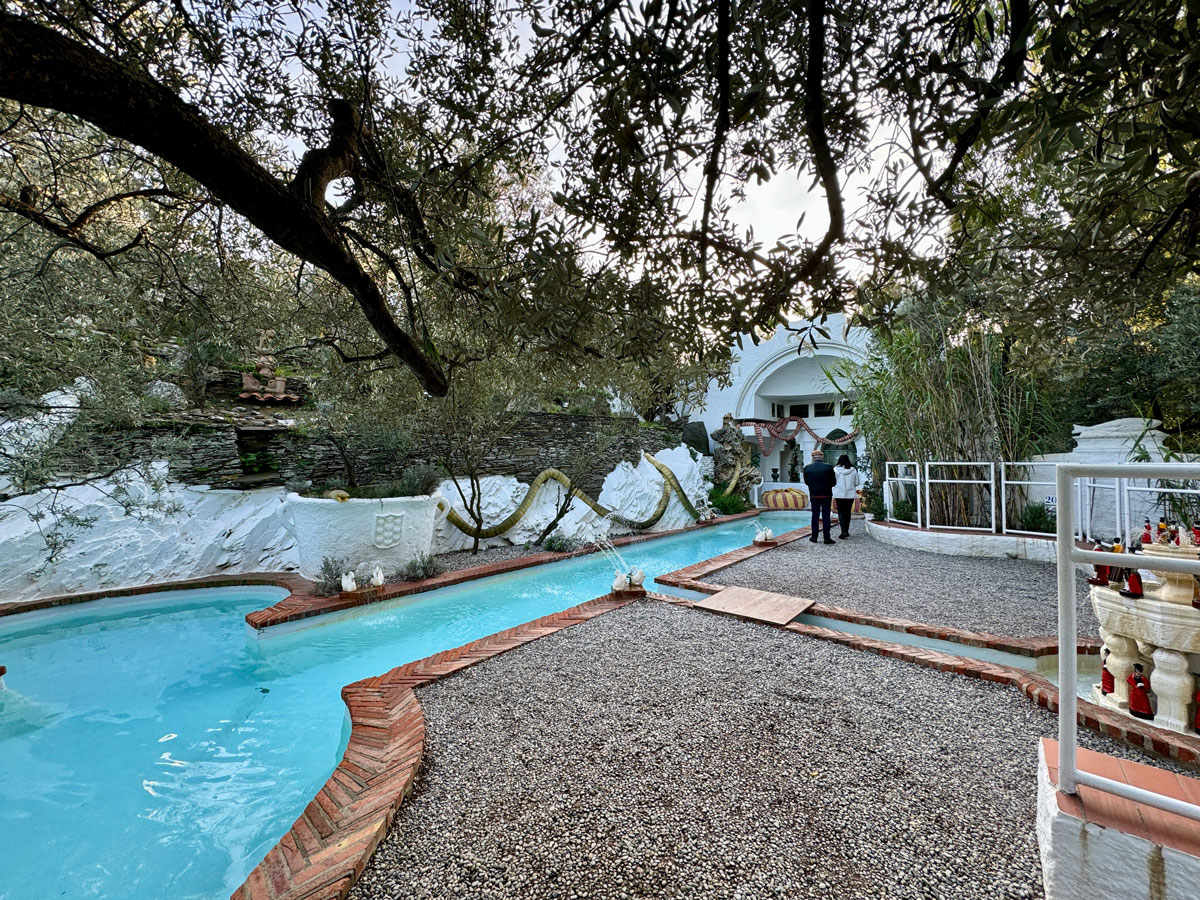
His Mae West lip motif was also found in the form of a sofa near the phallic pool. A snake sculpture runs alongside the length of the pool. This is where Dali hosted his visitors. Additional outdoor areas and terraced gardens accommodated larger gatherings.
We had a wonderful experience exploring the house of a genius while also being so immersed in nature. Be sure to visit. It makes for a fun roadtrip. Consider spending a night or two in this coastal gem on the Costa Brava. Find out more about all the Dali museums on the website – https://www.salvador-dali.org
Read the ETG Review of the Salvador Dali Theatre-Museum. Or discover even more about Dali, along with Gala’s Castle in Púbol, in another ETG article – The Dalinian Triangle coming soon.
Read additional articles on the ETG Spain Page.